Kinga Dobolyi is an artist living in the Washington DC area. Her paintings rely on gravity and chemical reactions to bring out natural effects
of pigment. Her training is soft pastels, and she also works in small-format watercolors as well as large canvases with acrylics.
Contact
kinga.dobolyi@gmail.com
MINERALS
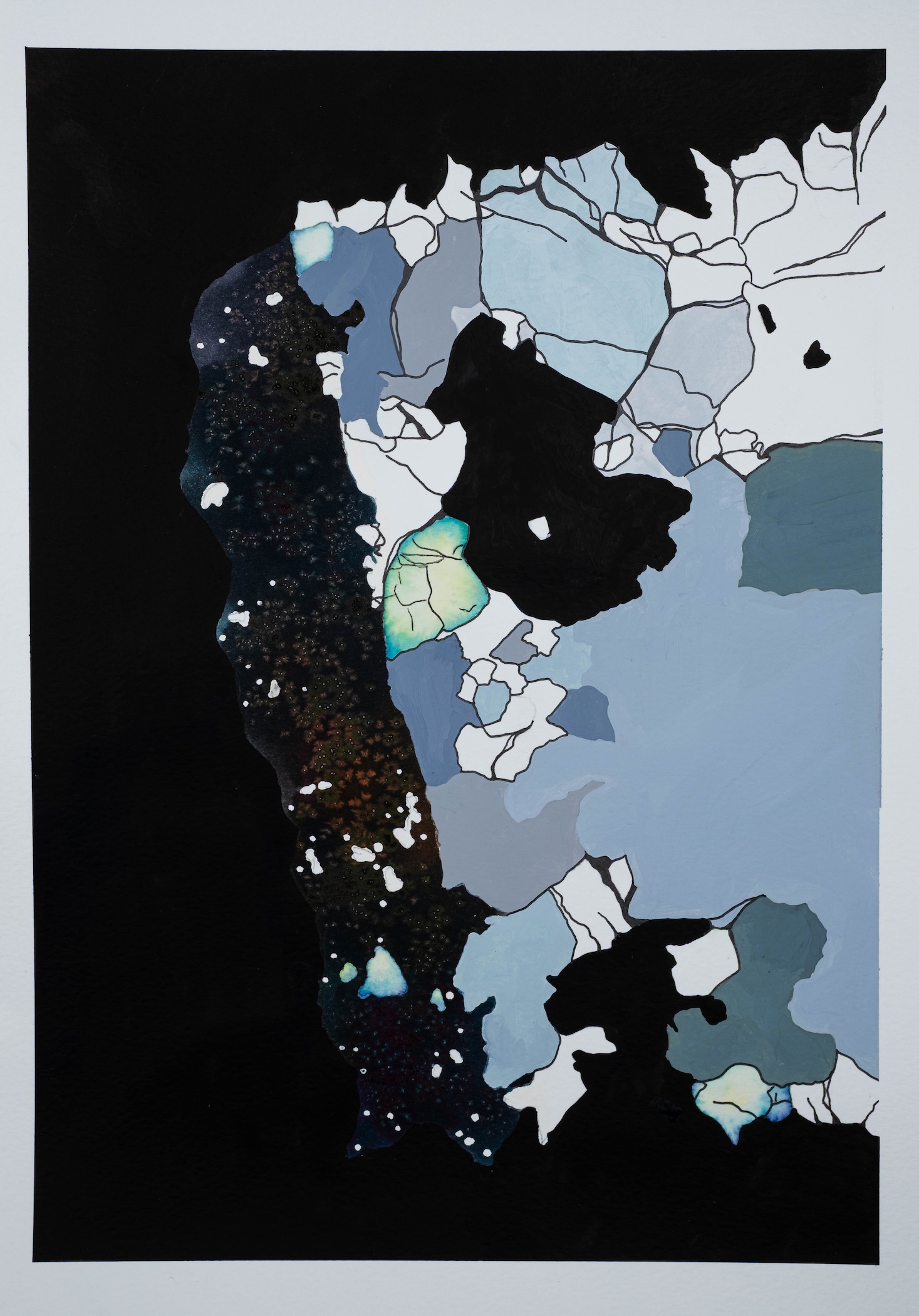
Ink and mixed media paintings of microscopic petrographs in partnership with images from Dr. Frank Mazdab (who provided the beautiful explanations below) at rockPTX.
What happens when an electromagnetic disturbance propagating through space traverses a transparent crystal? This ink and mixed media collection explores the interplay between polarized light and astonishingly thin slices of rock, and captures the beauty in this interaction.
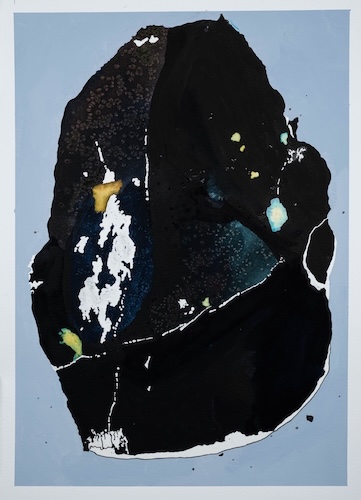
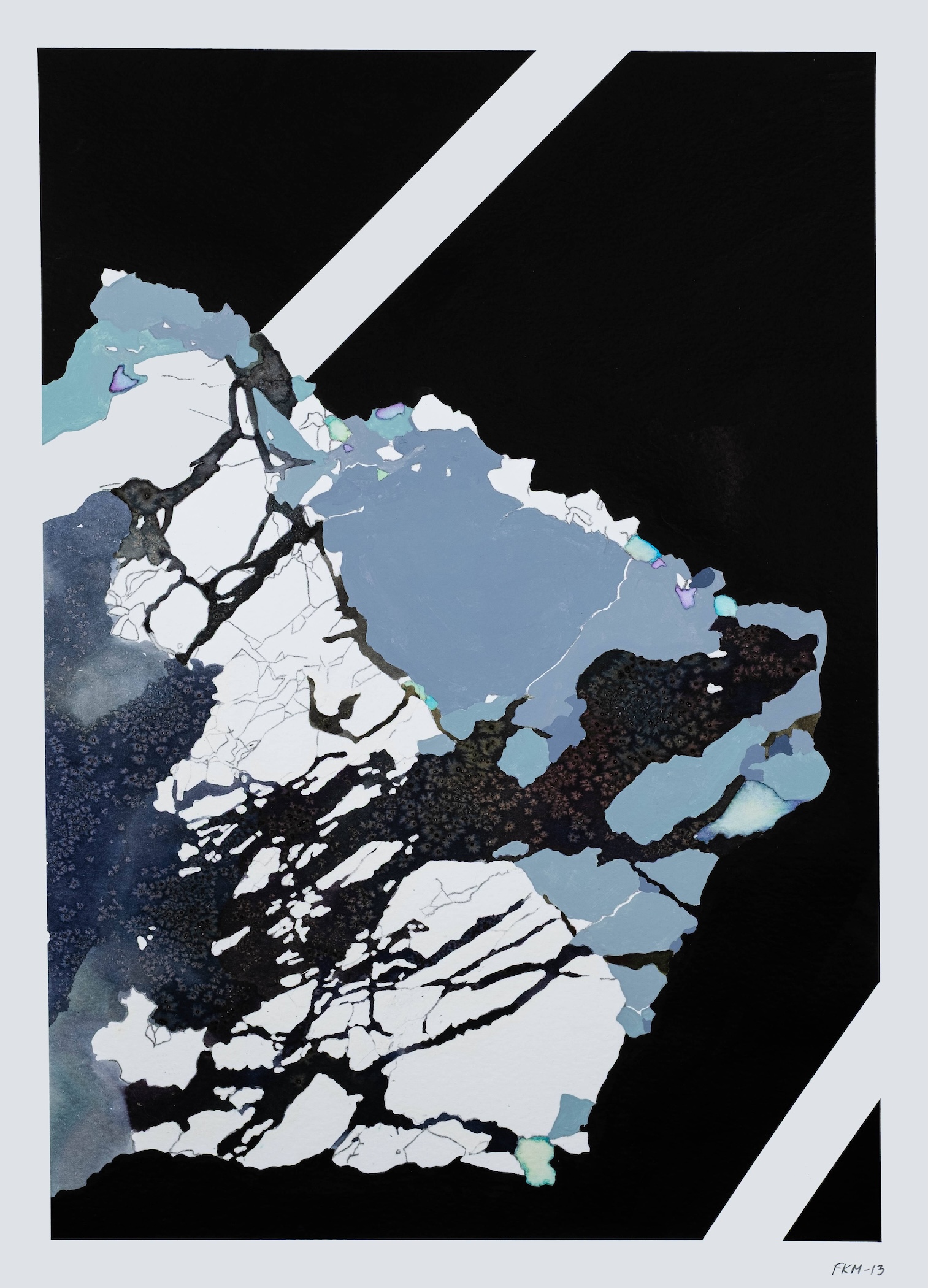
(above) Zoisite Quartz petrograph, ink, salt, and gesso on watercolor paper. Origial mineral source: FKM-13.
The 'speed limit of the universe', the speed of light in a vacuum, c, is a well-familiar quantity in pop culture knowledge, thanks to Albert Einstein’s famous derived relationship between mass and energy, E=mc^2. Perhaps almost as well known, the 'particle-wave duality' of light reconciles observations where light behaves more like a collection of particles (photons) with observations where it behaves more like an oscillating wave. Here, in the world of thin sections and transmitted polarized light microscopy, we're all about the wave.
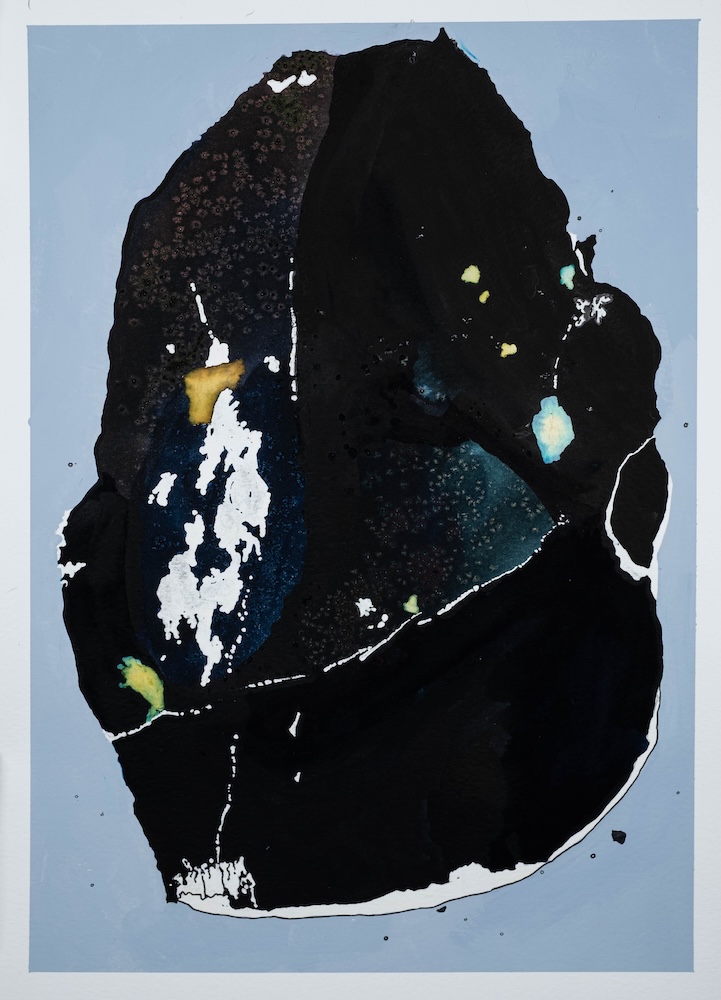
(above) Petrograph, ink, salt, and gesso on watercolor paper. Origial mineral source: FKM-128.
When light travels through materials besides empty space, it slows down, and often even more strangely, in some materials may split into two waves oscillating perpendicular to one another and traveling at different speeds through the crystal. This split only occurs in anisotropic crystals, materials where the arrangement of atoms in one direction is different than the arrangement of atoms in other directions; many common crystals like quartz, sugar, and ice are all anisotropic. In contrast, the atomic arrangement in isotropic materials is on average the same in every direction, whether that “sameness” is highly-ordered (as in table salt), or highly disordered, as in glass, liquid water, or air. In isotropic materials, light still slows down upon entering, but does not spit into two rays or change its starting oscillation direction.
(above) Peridotite in basalt petrograph, ink, salt, and gesso on watercolor paper. Origial mineral source: FKM-162.
Light directed through a piece of polarizing film, then through an isotropic crystal, and finally towards a second piece of polarizing film rotated 90° to the first results in a rather uninspiring outcome… no light passes through the second polarizing film, and the crystal appears black, even one that may otherwise be colorless as a thin slice. In anisotropic crystals suitably oriented, interference between the two waves of light allow a color to escape through the second polarizing film. This color is aptly named an interference color. This produced color has no relationship to the original color of the crystal, and even a colorless crystal can dazzle a viewer with a vibrant interference color. The interference color derives from the thickness of the crystal, its orientation relative to the oscillation directions of the waves passing through it, and fundamentally what type of crystal it is; it is often sufficiently characteristic as to help identify the type of mineral present.
Thus based on this foundation of geology and optics, this collection of watercolors and mixed media reveals the secrets of rock slices thinner than a human hair. But no microscope is needed here. Isotropic blacks clue us in to underlying perfect order (or perfect disorder in the glass of the slide) but offer us only shadowy shapes and silhouettes, though we can observe the crystal’s natural color and texture if we remove the second polarizing film from the light path. Anisotropic minerals present provide the patches and splashes of derived color, and avail us the opportunity to try out even more sophisticated optical methods to further characterize our crystals such as ‘optic figures’. To the scientist, the observed colors and patterns tell a history of formation, a bulk rock composition, and a position within the pressure-temperature regime of the Earth. But while perhaps valued by the geologist as simply ‘evidence', there is nonetheless an inherent and undeniable beauty to rocks in thin sections beyond the scientific secrets they hold; interpreted by the artist, this beauty, forged by that underlying foundational science, becomes accessible to all.
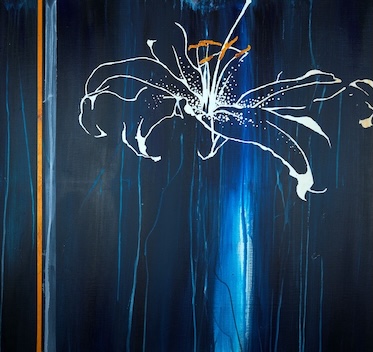
IN BLOOM
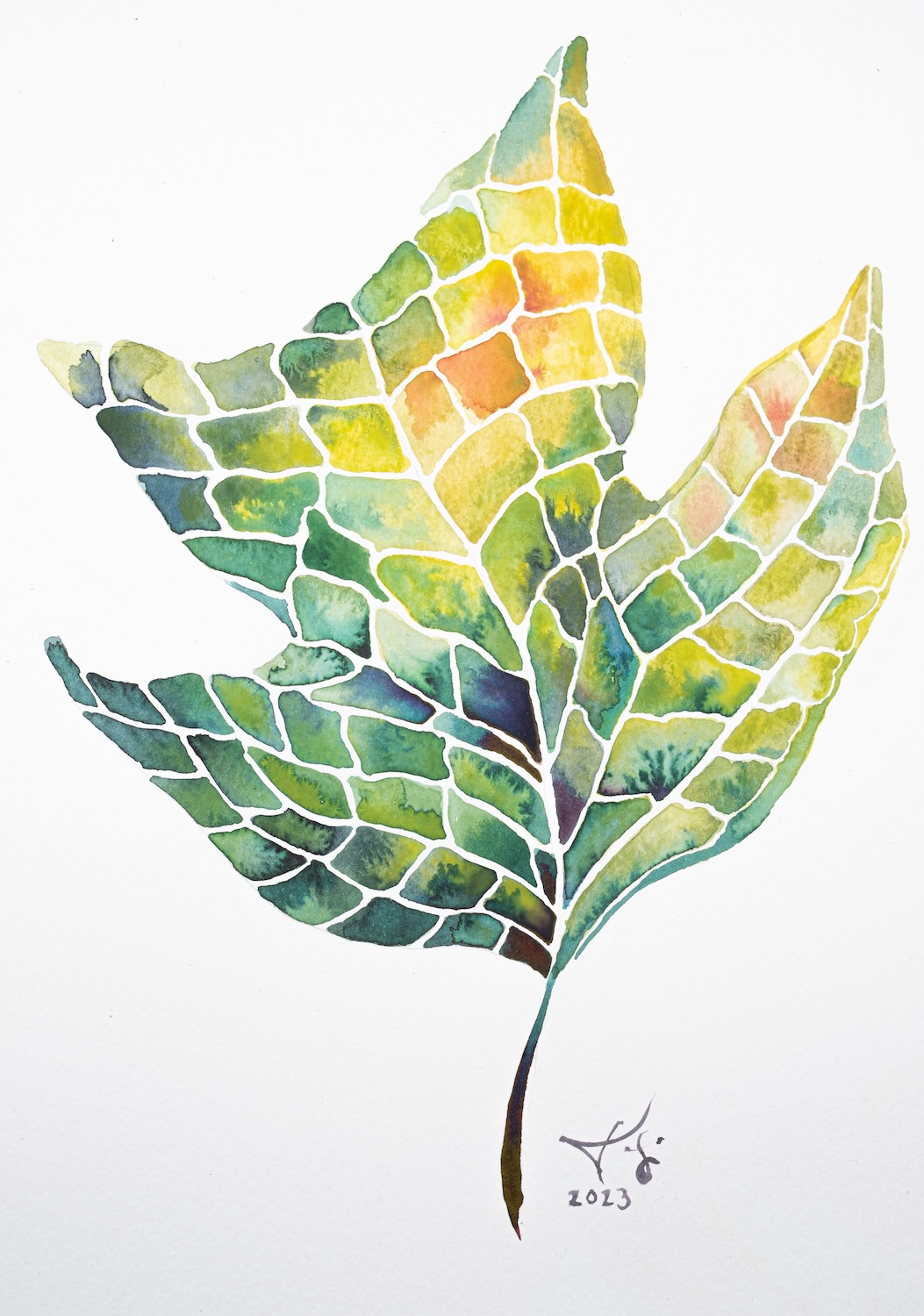
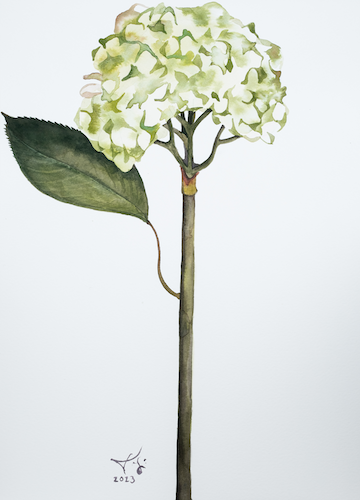
Nature-themed paintings of acrylic on canvas or watercolor on paper
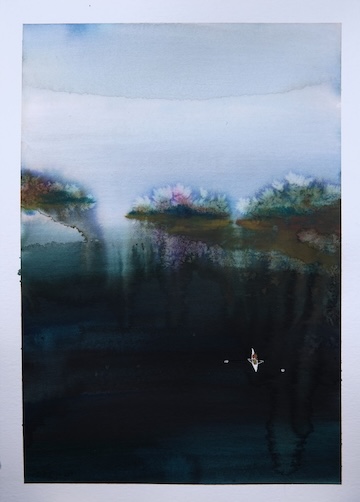
LANDSCAPES
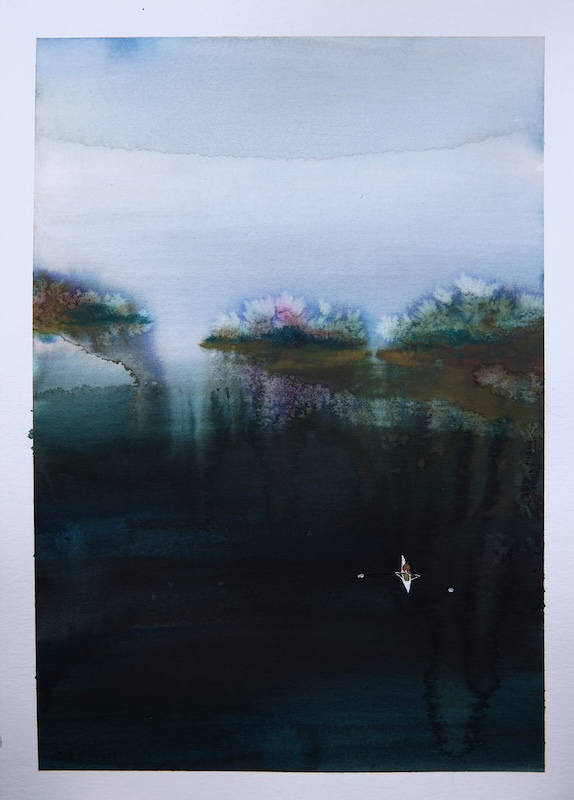
Watercolor and ink on paper
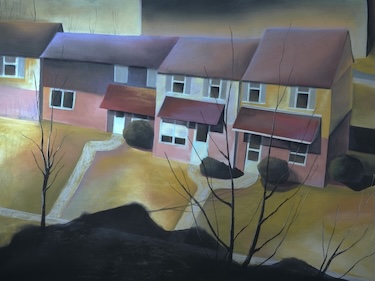
FINE ART
Pastels, inks, and acrylics on paper or canvas; large and small format
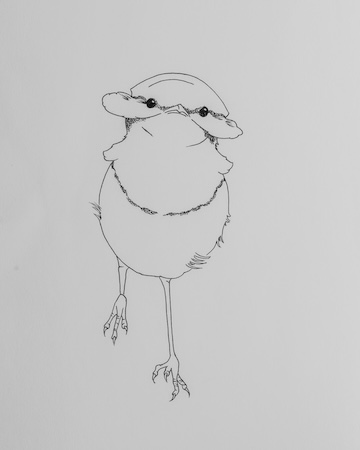
FOWL
Pen on paper from a set of 20
COMMISSIONS
Album covers, save-the-date images, wedding invitations, etc.





.jpg)